
The parliamentary elections in Bangladesh in February 2026 were regarded by many observers as an important step towards political stabilization. Following the fall of long-time Prime Minister Sheikh Hasina in August 2024 and the interim government under Nobel Peace Prize winner Muhammad Yunus, a nationwide electoral process was able to take place again after a period of political unrest. At the same time, the process was not without controversy, including the exclusion of the Awami League and ongoing allegations of corruption.
The voter turnout this year was just under 60 percent which is comparatively low. This suggests that many supporters of the excluded Awami League boycotted the vote. On a positive note, unlike in previous elections, election day remained largely peaceful, with no major outbreaks of violence reported, despite tensions and unrest in the run-up to the election.
The Bangladesh Nationalist Party (BNP) emerged from the elections with a clear majority. The new government, led by Prime Minister Tarique Rahman, was sworn in on February 17. The government has announced plans to implement reforms and include various social groups. At the same time, the participation of women remains very low. Of the 25 ministers, only one is a woman. Another notable development is a shift in the political balance of power: parties from the Islamist spectrum now form the strongest opposition force in the Bangladeshi parliament for the first time. Religious positions are also gaining influence within the student movement. This development suggests that religion-oriented politics are becoming increasingly significant in Bangladesh. Many people see this as a challenge to social diversity and minority rights. Addressing corruption, violence and abuse of power also remain a key task for the new government.
Especially in this phase of political transition, it will become evident whether the rule of law and democratic values will truly be protected and strengthened by the new government. One case that highlights these concerns is the continued detention of Prof. Dr. Abul Barkat.
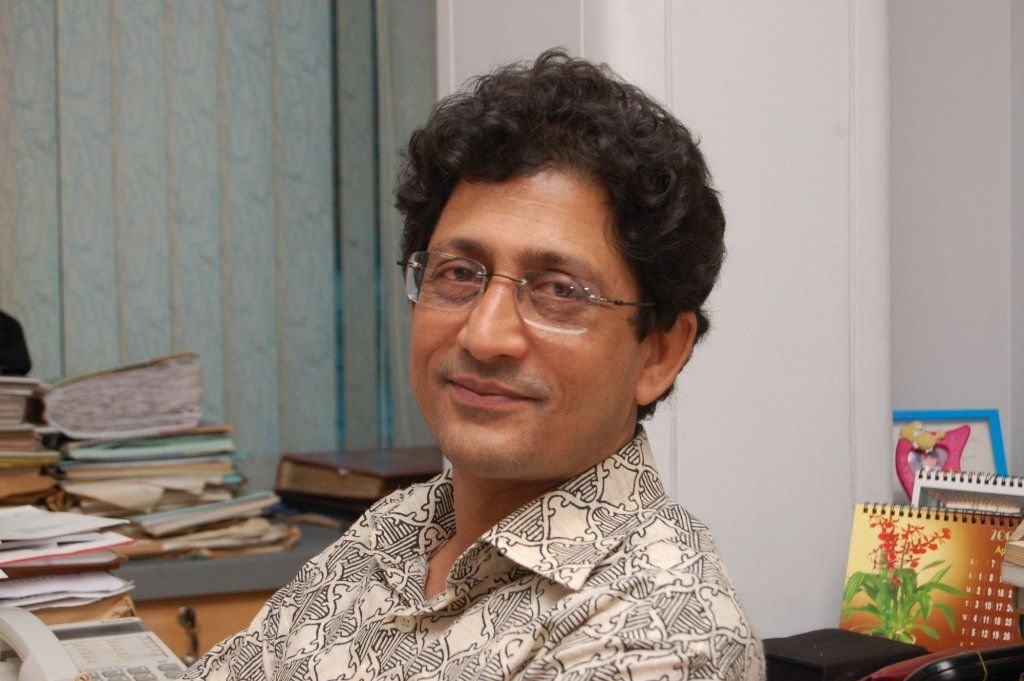
As Lichtbrücke e.V., we have been active in Bangladesh since 1983. From the very beginning, Prof. Dr. Abul Barkat has supported us in an advisory capacity and became our “Honorary Trustee” in Bangladesh. We value him as a committed scholar and a dedicated advocate for social justice. His work has always focused on the poorest and most vulnerable members of society, as well as on the rights of minorities. His guiding principle continues to shape our work to this day: “to turn human deprivation into human development.”
In July 2025, Prof. Dr. Abul Barkat was arrested. He is accused of being involved in a corruption case during his time as chairman of the state-owned Janata Bank Ltd. (2009-2014). These allegations are not new. A previous investigation found no evidence of his involvement. Nevertheless, he has remained in detention since his arrest. To date, no date has been set for a court hearing. His health condition is particularly concerning. Prof. Dr. Abul Barkat is over 70 years old and was already in poor health prior to his detention. To our knowledge, his condition has deteriorated significantly while in custody. Adequate medical care is urgently required. Numerous human rights defenders in Bangladesh have also criticised the allegations against him as unfounded and have called for his immediate release. A total of 122 respected public figures have pointed out that the charges lack a sufficient legal basis and that Barkat’s health condition necessitates a quick decision.
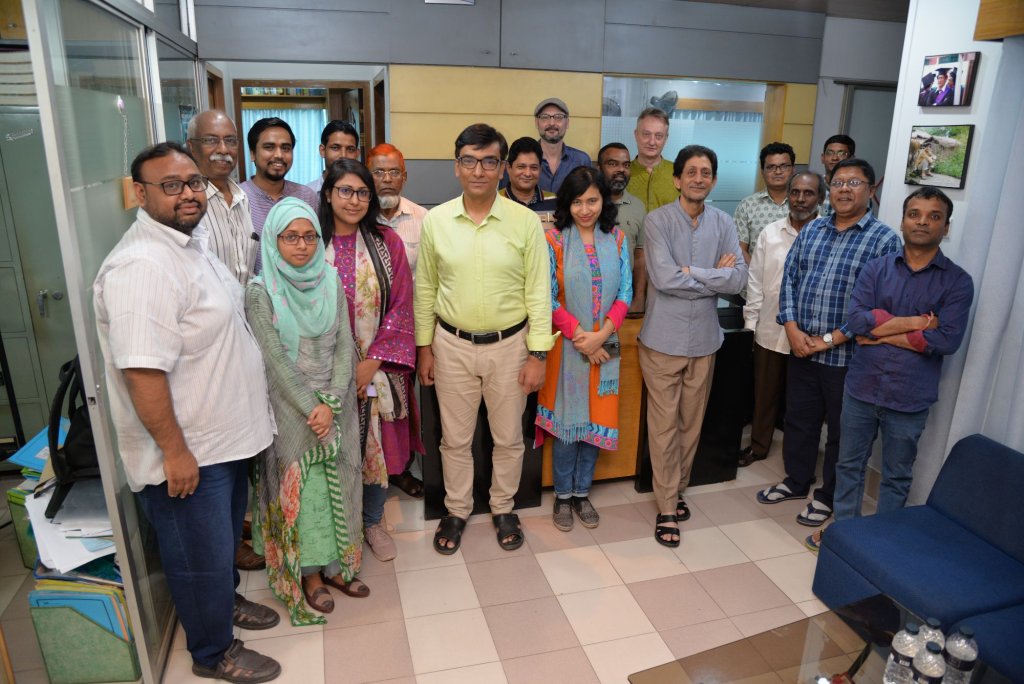
Prof. Dr. Abul Barkat with Holger Trechow and Andreas Unbehauen, along with other HDRC staff members in Dhaka, 2023.
Lichtbrücke e.V. has already contacted several political decision-makers regarding this matter. Letters have been sent to the German Ambassador to Bangladesh, Dr. Rüdiger Lotz, to the Federal Minister for Foreign Affairs, Johann Wadephul, and to the Federal Minister for Economic Cooperation and Development, Reem Alabali-Radovan. Amnesty International has also been informed about the situation. The aim of these efforts is to mobilise political support and thereby help secure the release of Prof. Dr. Abul Barkat.
We are deeply concerned about the detention of our long-standing partner. While others in comparable situations have at least been released on bail, Prof. Dr. Abul Barkat remains in custody without any prospect of a fair and transparent trial. As Lichtbrücke e.V., we stand in solidarity with Prof. Dr. Abul Barkat and his family. We call for his immediate release, the protection of his rights, and - should the charges not be completely dropped - a transparent and fair trial, as well as unrestricted access to medical care.